
Across languages, cultures and communities, human rights belong to every one of us. United for Human Rights promotes understanding of the Universal Declaration of Human Rights through education.
ABOUT US
Across languages, cultures and communities, human rights belong to every one of us. United for Human Rights promotes understanding of the Universal Declaration of Human Rights through education.
ABOUT US
Find teaching resources and ideas for human rights education.
EDUCATOR KIT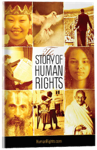
Discover the history behind human rights and explore the Universal Declaration in an introductory booklet.
FREE BOOKLETThis Swiss resource brings that learning closer to home, in English, French, German and Italian. Start a conversation in your classroom, at work or in your community.
International programmeThis branch connects people in Switzerland with the international United for Human Rights educational programme while creating a clear local point of reference for schools, civil society and communities.
Use accessible materials, films and lesson resources to introduce the Universal Declaration of Human Rights in classrooms and learning settings.
Share the programme’s educational tools in community activities, events and partnerships while keeping the materials intact and properly credited.
Learn the 30 rights, share them with others and use the free course and films as a starting point for informed conversations.
Emailinfo@connaissezvosdroits.ch
Phone+41789430668
Explore the Universal Declaration of Human Rights article by article. Each card gives a short plain-language summary; use the button below for the complete official text.
All people are born free and equal in dignity and rights, and should treat one another with respect and solidarity.
Everyone has the same rights without discrimination based on race, sex, language, religion, origin, status or any other condition.
Everyone has the right to life, liberty and personal security.
No one may be held in slavery or servitude; slavery and the slave trade are prohibited in every form.
No one may be subjected to torture or to cruel, inhuman or degrading treatment or punishment.
Everyone has the right to be recognized everywhere as a person before the law.
Everyone is equal before the law and entitled to equal protection without discrimination.
Everyone has the right to an effective remedy when fundamental rights protected by law are violated.
No one may be arbitrarily arrested, detained or exiled.
Everyone is entitled to a fair and public hearing by an independent and impartial tribunal.
Anyone accused of a crime is presumed innocent until proven guilty in a fair trial, and cannot be punished under retroactive criminal laws.
No one should face arbitrary interference with privacy, family, home or correspondence, or unlawful attacks on honour and reputation.
Everyone may move freely within a country, leave any country, and return to their own country.
People facing persecution have the right to seek and enjoy asylum in other countries, subject to the Declaration’s stated limits.
Everyone has the right to a nationality and may not be arbitrarily deprived of it or denied the right to change it.
Adults have the right to marry and found a family with free and full consent, and with equal rights during marriage and at its dissolution.
Everyone may own property alone or with others and may not be arbitrarily deprived of it.
Everyone has freedom of thought, conscience and religion, including the freedom to change belief and to manifest it privately or publicly.
Everyone has freedom of opinion and expression, including the right to seek, receive and share information and ideas across borders.
Everyone has the right to peaceful assembly and association, and no one may be compelled to belong to an association.
Everyone may take part in government, directly or through freely chosen representatives, and has equal access to public service.
Everyone, as a member of society, has the right to social security and to the economic, social and cultural rights essential to dignity.
Everyone has the right to work, choose employment, receive fair pay, enjoy just conditions and form or join trade unions.
Everyone has the right to rest and leisure, including reasonable limits on working hours and periodic paid holidays.
Everyone has the right to an adequate standard of living, health and social protection; motherhood and childhood deserve special care.
Everyone has the right to education. Elementary education should be free and compulsory, and education should develop the human personality and respect for rights.
Everyone may participate in cultural life, enjoy the arts, share in scientific progress, and protect the moral and material interests of their creations.
Everyone is entitled to a social and international order in which the rights and freedoms in this Declaration can be fully realized.
Everyone has duties to the community. Rights may be limited only by law to respect others’ rights and meet legitimate democratic public needs.
Nothing in the Declaration may be used to justify destroying any of the rights and freedoms it protects.
Thirty short films illustrate the 30 articles of the Universal Declaration of Human Rights through everyday situations.
A starting point for curious minds, teachers and communities. Find teaching resources and ideas for human rights education.
Explore teaching materialsDiscover films that make the meaning of human rights easier to understand.
Explore the videosStart with one conversation. Share a resource, introduce human rights in a lesson or connect with the international United for Human Rights network.
Connect with the international teamRecent human rights education activities, articles and perspectives from Switzerland.

The Eurovision 2026 boycott debate illustrates tensions between collective political decisions, access to information and participation in cultural life.

The death of 11-year-old Lyhanna in France raises difficult questions about child safety, warning signs and the duty of institutions to protect.

The death of Bernadette Chirac offers a case study in the balance between family privacy, public life and social engagement.